Property
Talk to me before you sign the deposit or pay any money
Missing planning permissions and discrepancies in title deeds are far more common than buyers expect. I run the legal checks to protect you before you commit to anything — so your deposit isn't on the line over problems that were already there.
A reservation fee of around €3,000 is standard when buying in Spain, and it's usually non-refundable. Most people come to me after they've already signed it — talk to me before you transfer anything.
The standard deposit document doesn't protect the buyer. I review it first and add a clause: if the legality or boundaries are wrong and the seller doesn't fix it, your money is returned.
What these checks catch
Three things go wrong when people skip them. First, you lose your deposit if you pull out later — and it's not always just the initial €3,000; further into the process it can run to tens of thousands. Second, you end up paying to fix a problem the vendor should, by rights, have sorted before ownership transferred. Third, you lose the room to negotiate the price down if you decide to go ahead with the property anyway.
Remember, the estate agent represents the vendor and may not always know about problems that aren't visible on the surface. The good news is that speaking to me first doesn't just help you avoid the pitfalls — it means you can go ahead with the home of your dreams knowing everything is legitimate and legal.
I check every estate agent's sales agreement, and make sure that until those checks are done, you have the right to withdraw without penalty and can reclaim your deposit in full.
How I work with you — the seven steps
1. Free consultation.
2. Engage me as your legal adviser, with fees set out up front.
3. Personal documentation — your NIE and a Spanish bank account.
Don't have either of those yet? No need to worry — sorting them out is part of my service. I'll go with you to the bank to open your account, and I'll complete the paperwork for your NIE myself. Your NIE (Número de Identificación de Extranjero) is your foreigner's ID number in Spain, and it matters because you can't buy a property, pay tax, or even open a bank account here without one — so it's one of the very first things we get in place.
4. Property searches and examination of the deeds. This is where I earn my fee.
5. I review the findings with you in plain English.
6. We agree a completion date — Spain differs from England here, and it can be as fast as around six weeks.
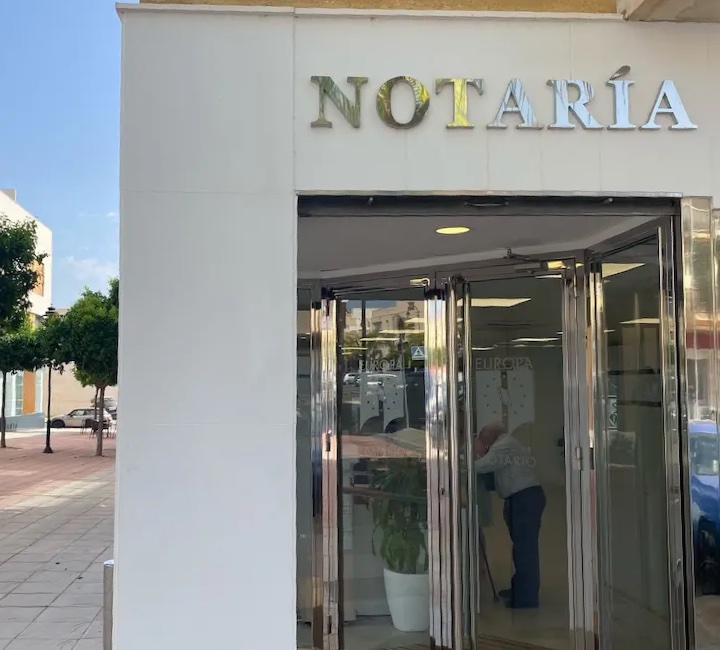
7. Notary and signing, which I attend, plus transferring all utilities into your name — water, electricity, basura, and IBI.
Estate agents recommend me because I work efficiently. Clients recommend me because I leave no stone unturned.
Cadastre vs Land Registry
England has only the Land Registry; Spain has both a cadastre and a Land Registry, and discrepancies in square metres between the two are the norm here, not the exception. The fix is an architect or technician report that certifies the exact metres, so both records reconcile — done before you sign the nota.
If you're buying, I don't just make sure everything is legally correct — as part of the negotiation and the purchase documents, I make sure the cost of putting things right is covered by the vendor and their solicitor, not you. I'm watching for these things on your behalf throughout.
Sometimes the fix is straightforward. Other times — land that's been subdivided between family members over generations, or a developer who never did things correctly in the first place — it can turn into something far more complicated. If that looks likely before you've signed the deposit, I'll tell you, so you can decide whether to go ahead, or at least know roughly how long it's going to take.
AFO
Rustic properties without a first-occupation licence are very common on rustic land locally. An AFO is what I arrange so the property is legally recognised.
Energy and electrical certification
A Certificado de Eficiencia Energética, plus electrical and installation certification, is mandatory on purchase — it certifies the property and its installation are built to law.
Survey
Surveys are uncommon in Spain, but I'll arrange one — I work with technicians — for UK buyers who want the reassurance they're used to.
Modelo 600
This is the purchase/transfer tax, around 6-7%. I file it myself, rather than farming it out to the notary or an external company — one person handling everything under one umbrella.
Planning to rent it out?
Check whether the community of owners has registered a no-holiday-let agreement at the land registry — if they have, you won't be able to rent. It's critical to know this before you buy, not after. See Taxes for the licence and NRA/NRE requirements.
Northern Europeans expect deeds, boundaries, and structural checks — that's exactly what I provide. And if a property is too much of a mess, I'll honestly tell you to walk away.
I attend notary appointments across Alicante and Murcia too, not only Almería.
We loved that it was Paula who alerted us that the second floor didn't have planning permission — this hadn't been picked up when the sellers themselves moved in. Property client, Turre, Almería
Common questions
What's the €3,000 reservation deposit — and is it refundable?
A reservation fee of around €3,000 is standard, and it's usually non-refundable. The standard deposit document doesn't protect the buyer — I review it first and add a clause so your money is returned if the legality or boundaries are wrong and the seller doesn't fix it.
Should I really speak to a lawyer before I sign the deposit?
Yes — most people come to me after they've already signed. Talking to me first is the single most valuable thing you can do before committing any money.
What's the difference between the cadastre and the land registry, and why does it matter?
England has only the Land Registry. Spain has both, and discrepancies in square metres between the two are the norm here, not the exception. I have an architect or technician certify the exact metres and reconcile both records before you sign.
What is an AFO and do I need one?
It's common for rustic properties here to lack a first-occupation licence. An AFO is what I arrange so the property is legally recognised — I'll confirm whether the one you're looking at needs it.
Do you attend the notary with me?
Yes, always — including appointments across Alicante and Murcia, not only Almería.
Tell me what you're trying to do
No forms to fill in and no charge for the first conversation. I'll tell you honestly what it takes.